Search

Popular

Dog Health

Are Yak Chews Safe for Dogs? An Honest UK Guide

HY
Highland Yak Chew Team
7 min read
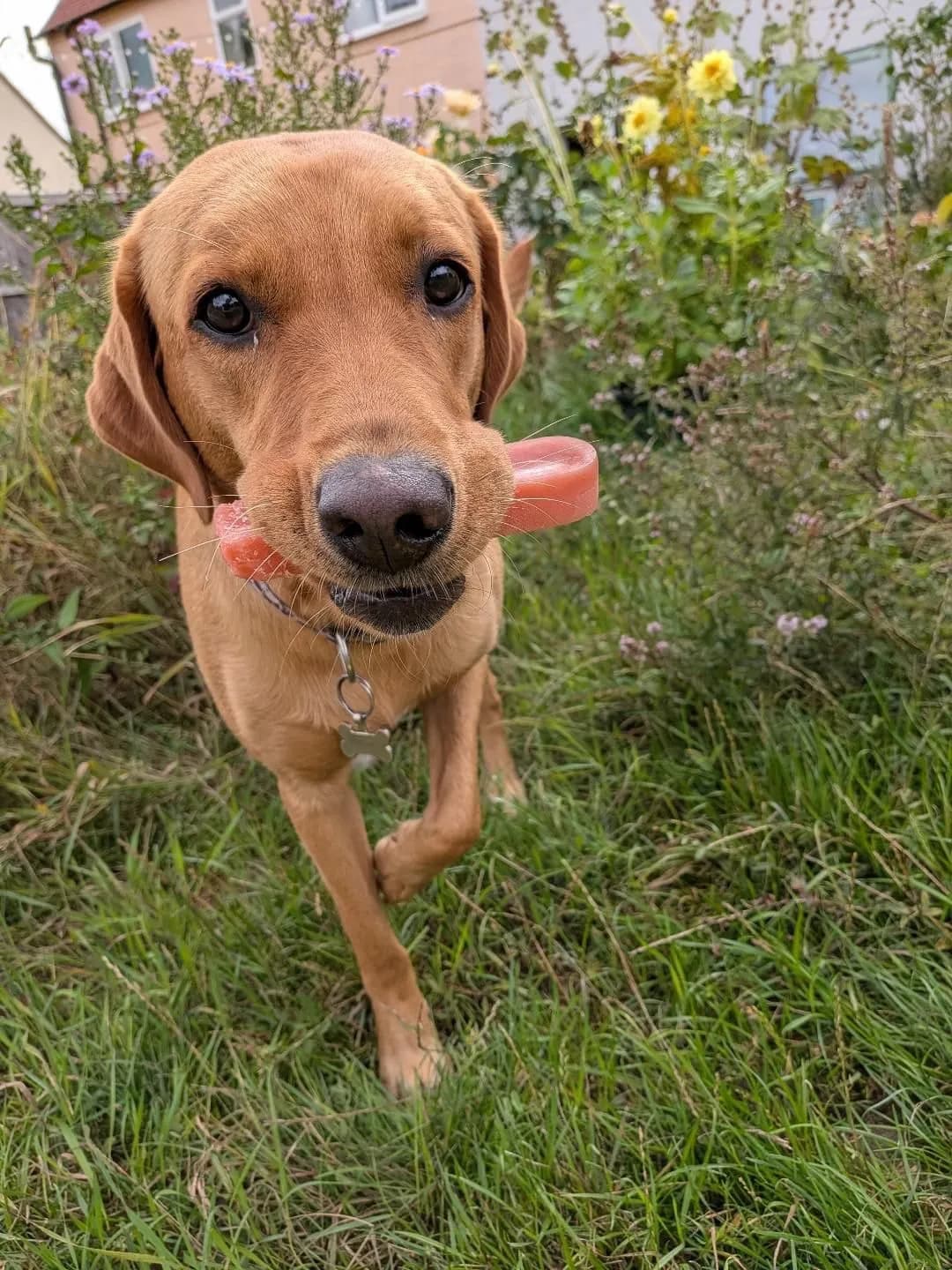
Fox red Labrador walking across a garden lawn carrying a strawberry Highland Yak Chew in its mouth

Fox red Labrador walking across a garden lawn carrying a strawberry Highland Yak Chew in its mouth

Are Yak Chews Safe for Dogs?

If you have searched "are yak chews safe for dogs", you have probably already seen two kinds of answer: shops that say they are perfectly safe, and forum threads that make every chew sound dangerous. The truth sits in between, and it is mostly about how you use them.

Here is what a yak chew actually is, where the real risks lie, and the habits that make chewing safer.

What a Yak Milk Chew Is

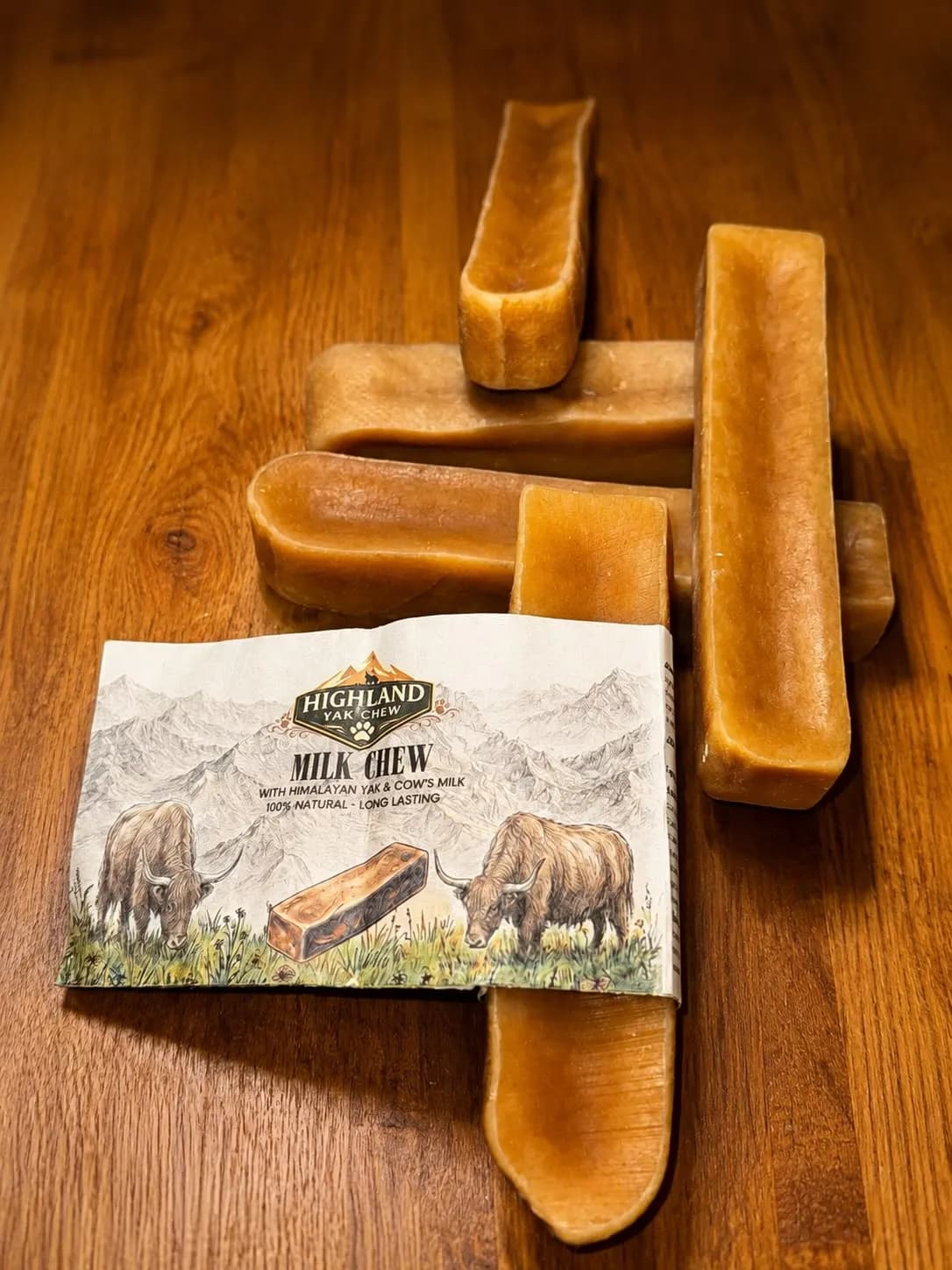
A yak milk chew — sometimes called a Himalayan dog chew or churpi — is a hard cheese. Ours is made from yak and cow milk, lime juice and a little salt. The milk is boiled, curdled with the lime juice, pressed into blocks, and then dried slowly until it is rock hard.

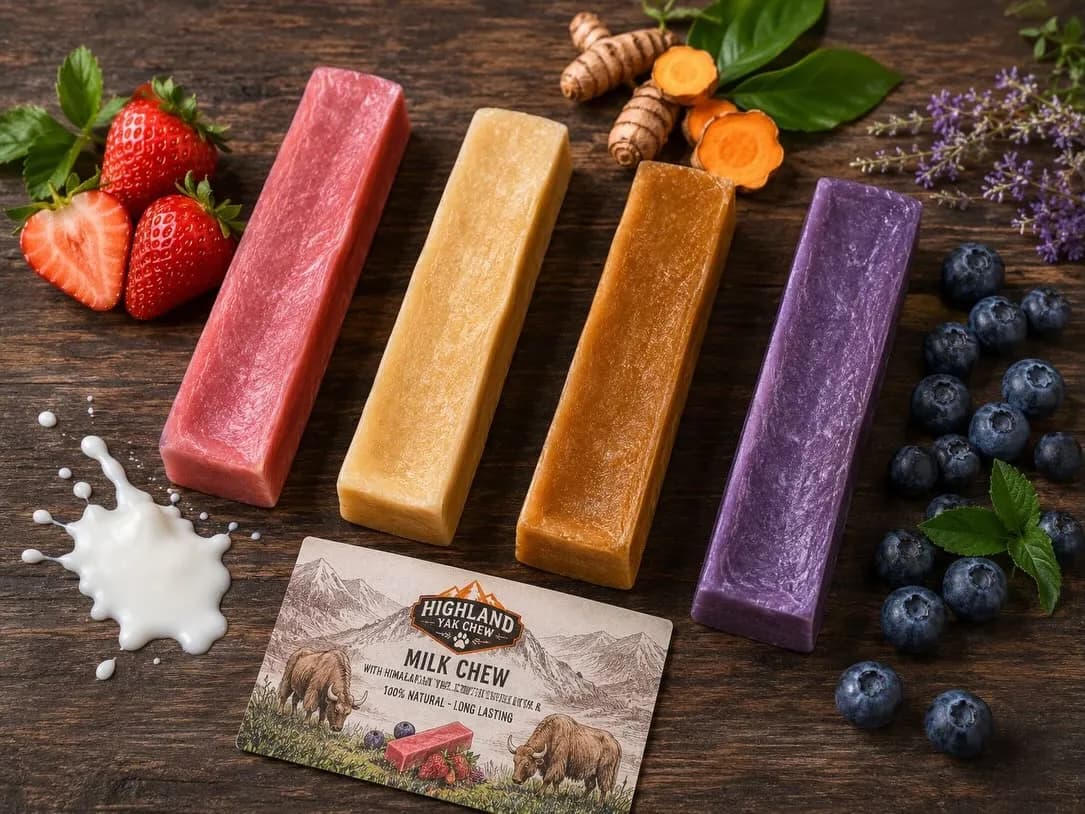
Our flavoured chews add one more natural ingredient — real strawberry, blueberry or turmeric. There is no hide, no bone, no grain and nothing artificial.

That matters for safety because it changes how the chew behaves under a dog’s teeth. As your dog chews, saliva softens the surface and they scrape away thin layers. The chew wears down gradually rather than snapping into sharp pieces.
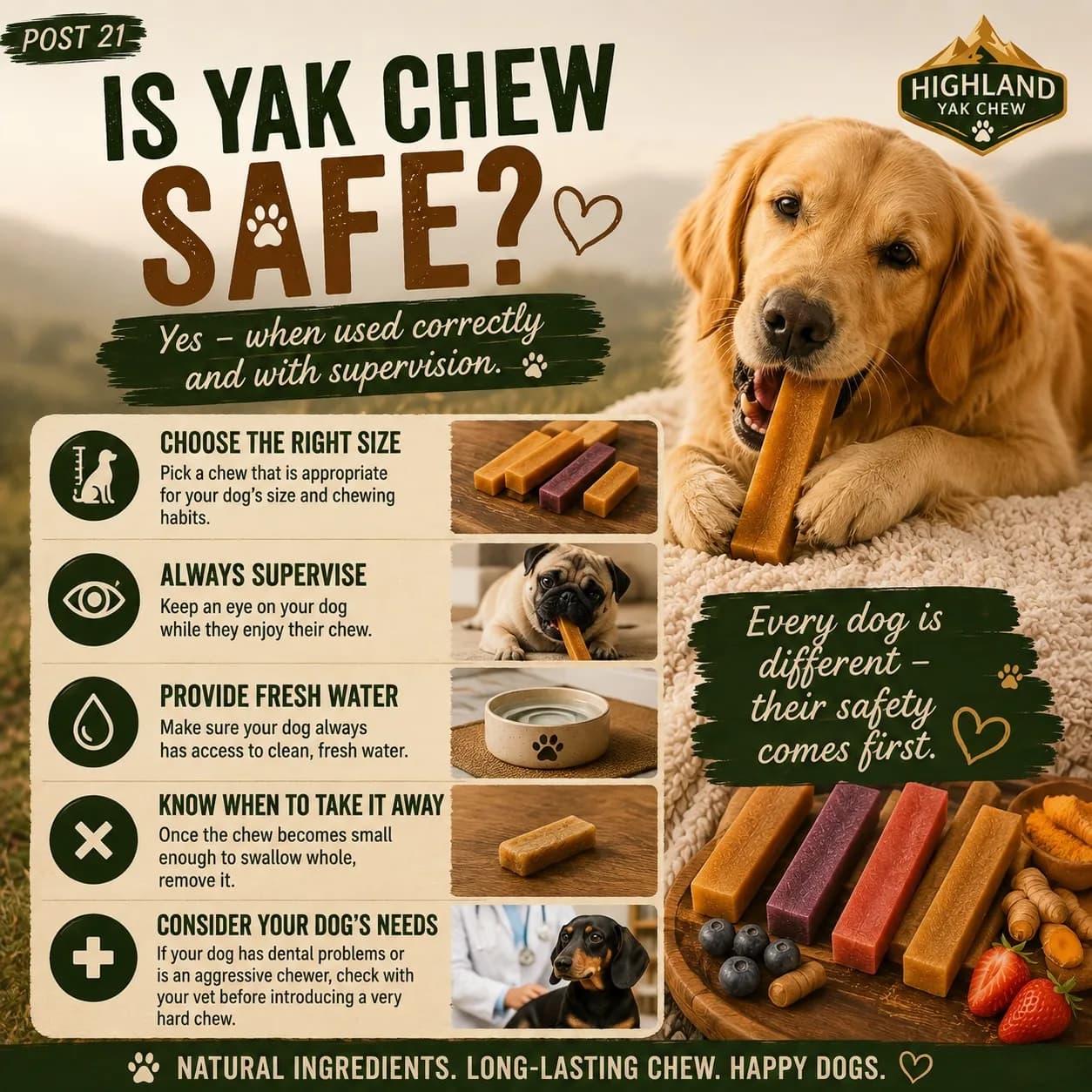
Highland Yak Chew infographic: is yak chew safe? Yes, when used correctly and with supervision — choose the right size, always supervise, provide fresh water, take it away when it gets small, and consider your dog’s needs

Where the Real Risks Are

Being honest about this is more useful than pretending a chew is risk-free. These are the things to watch:

  • Choking on the last piece. This is the big one. When a chew gets small enough to fit whole in your dog’s mouth, a keen dog may try to swallow it. Take it away before that happens.
  • Teeth. A yak chew is hard when it is new. Most dogs gnaw and soften it, but a dog who bites down with full force on hard objects can damage a tooth on any hard chew.
  • Gulping large chunks. Some dogs break off and swallow big pieces instead of gnawing. If yours does, a yak chew may not suit them — or try a bigger size so it is harder to get a mouthful.
  • Dairy. It is a milk product. Dogs with a dairy allergy or intolerance should avoid it.
  • Too much at once. It is food. A dog who gets through a whole chew in one go may have an upset stomach, and chews should count towards their daily intake.
  • Five Habits That Make Yak Chews Safer

  • Pick the right size. Bigger is safer than smaller. Our [yak chew size guide](/blog/yak-chew-size-guide) matches each chew to your dog’s weight.
  • Supervise. Especially for the first few sessions, until you know how your dog chews.
  • Keep sessions short. Fifteen to thirty minutes, then put the chew away for tomorrow.
  • Leave fresh water down. Chewing is thirsty work.
  • Take the end piece away. Then turn it into a treat — see below.
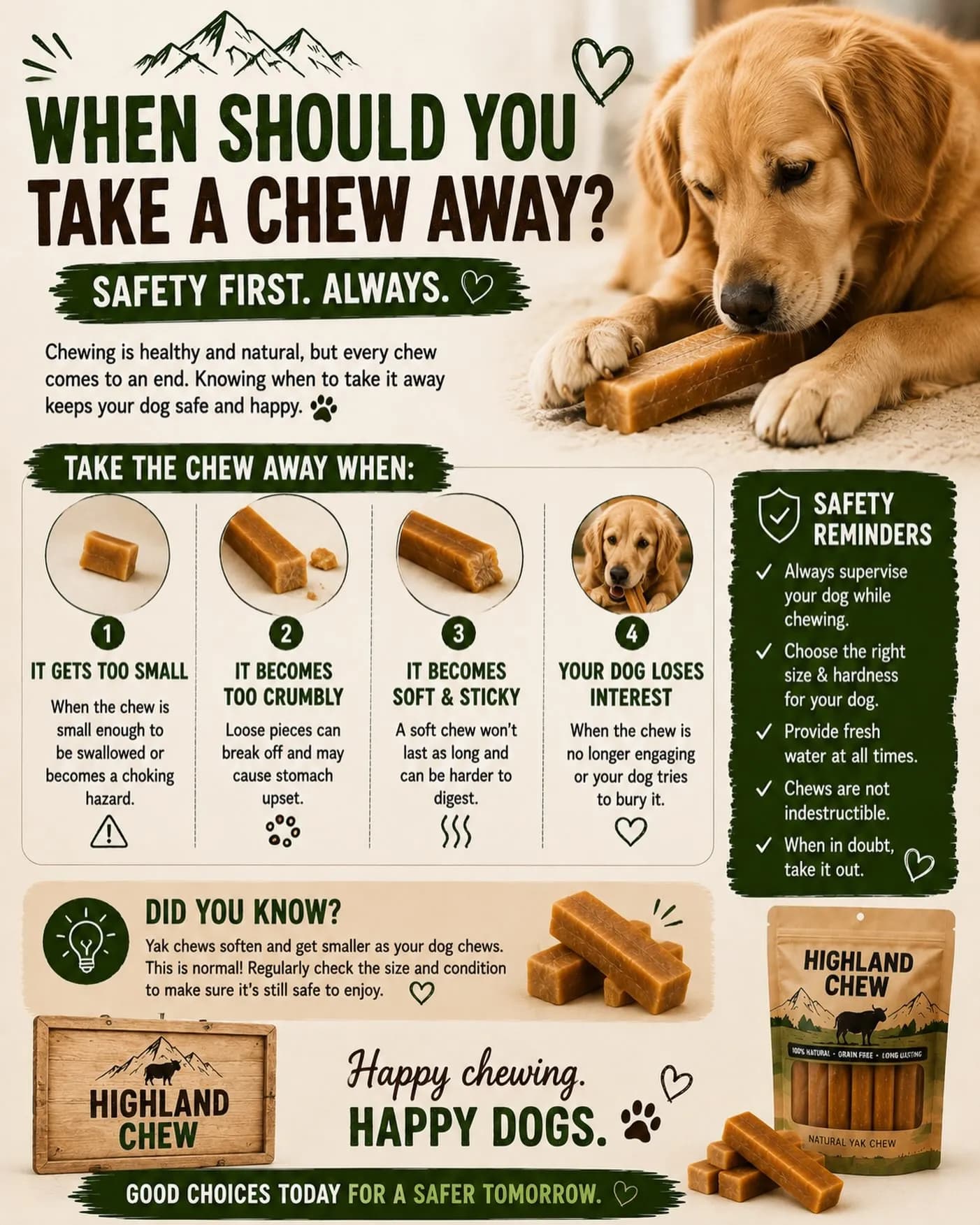
  • Infographic showing when to take a yak chew away: when it is small enough to swallow, crumbly, soft and sticky, or your dog loses interest
    Infographic showing when to take a yak chew away: when it is small enough to swallow, crumbly, soft and sticky, or your dog loses interest

    What to Do With the Last Piece

    This is where yak chews have an advantage over most long-lasting chews. Instead of throwing away the end piece, soak it in water for a few minutes, then microwave it for 30–60 seconds. It puffs up into a light, crunchy treat that is easy to bite through. Let it cool completely before giving it to your dog — the middle stays hot for a while.

    We explain the full method in how long do yak chews last. If you would rather skip the microwave, our Classic Puff Chew comes ready to puff.

    Who Should Be More Careful

  • Puppies under about four months. Wait until their adult teeth are coming through, and supervise closely.
  • Dogs with dental problems. Worn, cracked or recently treated teeth need a softer option.
  • Senior dogs. Many still enjoy a yak chew, but puffed pieces are gentler.
  • Dogs with a health condition or special diet. Ask your vet first.
  • The Honest Verdict

    Yak chews are a sensible choice for most healthy adult dogs. They are simple, food-based and wear down gradually instead of splintering. They are safest when they are the right size, when someone is around while your dog chews, and when the last piece is taken away.

    If you want to see how they compare with other popular chews, read yak chews vs rawhide vs antlers.

    Ready to Try One?

    Use code FRANK10 at checkout for 10% off your order. UK delivery is a flat £1.99, and orders usually arrive within 3–5 working days. Browse all our chews, start with a Classic Yak Chew, or send us a message if you are not sure which one to pick.
    Common Questions

    Are yak chews safe for dogs?

    For most healthy adult dogs, yes — when the chew is the right size, your dog is supervised, and you take the last piece away before it is small enough to swallow whole. Yak milk chews are a hard cheese made from yak and cow milk, lime juice and salt, so they soften gradually rather than splintering. No chew is risk-free, though: any hard chew can damage teeth if a dog bites down hard, and any piece swallowed whole can cause choking or a blockage.

    Are yak milk chews safe for dogs to eat completely?

    Yak milk chews are food, so the flakes your dog scrapes off as they chew are meant to be eaten. The risk is the final piece: once it is small enough to fit whole in your dog’s mouth, take it away. You can microwave that end piece so it puffs into a light, crunchy treat that is easy to bite through.

    Can puppies have yak chews?

    We suggest waiting until a puppy is at least four months old, choosing a size that suits their adult weight rather than their current one, and keeping chewing sessions short and supervised. Puppy teeth and jaws are still developing, so if you have any doubts, ask your own vet before offering any hard chew.

    Which dogs should not have yak chews?

    Skip yak chews if your dog has a known dairy allergy or intolerance, has cracked, worn or recently treated teeth, or tends to swallow chews in large chunks rather than gnawing. Dogs on a strict diet should have chews counted as part of their daily food. If your dog has a health condition, check with your vet first.

    How long should I let my dog chew a yak chew for?

    Many owners give a chew for a session of 15 to 30 minutes and then put it away until the next day. That keeps the chew lasting longer, stops a keen chewer overdoing it, and means you are around while they chew.

    Do yak chews smell or stain?

    Yak milk chews have very little smell compared with many animal-part chews, and they do not leave greasy marks. When a chew has been worked on for a while the surface gets soft and a little sticky, so a washable mat or hard floor is handy.

    Shop Now

    Ready to treat your dog?

    Browse our full range of natural yak milk chews, Himalayan puff treats, and Highland mix chews — all grain-free, all natural.

    Use code FRANK10 for 10% off your order.

    Shop All Products

    More Articles