Yak Chew vs Bone: Which Is Actually Safer for Your Dog?
Ask a room of UK dog owners what makes the best long-lasting treat and someone will say a bone. It is the oldest answer there is — dogs and bones go together in every cartoon, every idiom, every children's book.
It is also the question UK vets field most often, and their answer is more cautious than the cartoons suggest.
This is an honest comparison. Not every bone is dangerous, and no chew is risk-free. But the differences matter, and they are worth understanding before you hand something to your dog for the next few hours.
The Problem With Cooked Bones
On cooked bones, veterinary advice in the UK is close to unanimous — organisations including the PDSA and the RSPCA advise against giving them at all.
The reason is physical. Bone gets its toughness from collagen, a flexible protein woven through the mineral structure. Cooking drives out moisture and degrades that collagen. What is left behind is brittle: instead of wearing down gradually under a dog's teeth, it shatters into sharp fragments.
Those fragments can:
This covers exactly the bones most likely to reach a dog by accident — the Sunday roast, the chicken carcass, the leftover chop, the rib bones scraped off a plate. A cooked bone is never a safe dog chew.
Raw Bones Are Safer — But Not Risk-Free
Raw bones retain their collagen, so they are far less likely to splinter. Plenty of owners feed them without incident, and raw feeders make a reasonable case for them.
They are still not without risk:
Raw bones are a considered choice with real trade-offs, not an obviously safe default.
How a Yak Milk Chew Compares
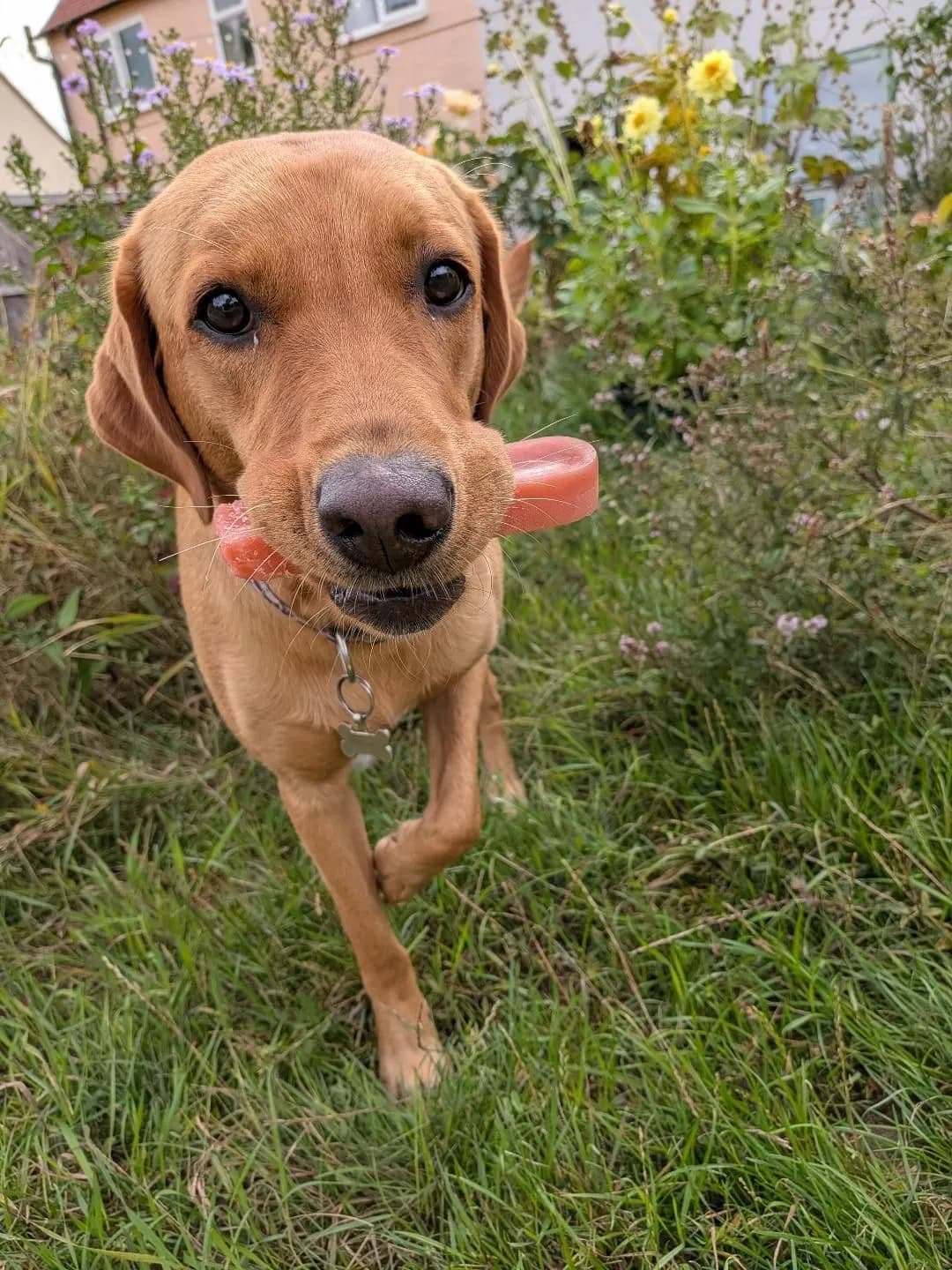
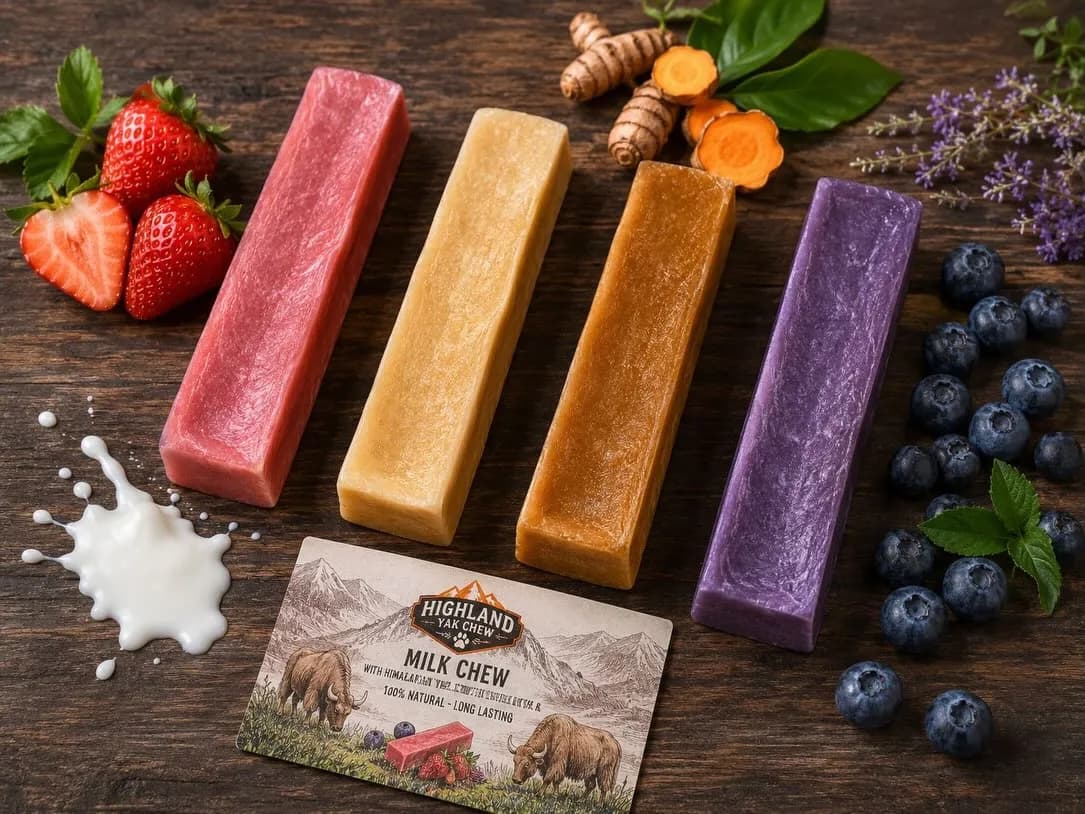
A Highland Yak Chew takes a completely different approach to the same problem: how do you give a dog something that lasts for hours without giving them something that can break?
It is not a bone at all. It is a hard cheese, made in the Himalayas from yak and cow milk, a little lime juice, and a pinch of salt — boiled, curdled, pressed, then slow-dried and smoked over several weeks. It is a preservation method Himalayan communities used to feed themselves through winter, long before anyone thought of giving one to a dog.
| Bones | Highland Yak Chew | |
|---|---|---|
| Splinter risk | Cooked bones shatter into sharp shards | Softens progressively; does not splinter |
| Teeth | Hard bone can cause slab fractures | Softens with saliva — dogs gnaw rather than crack |
| Bacteria | Raw bone carries salmonella and campylobacter | Dried and shelf-stable |
| Ingredients | Whatever the animal was | Milk, lime juice, salt — three ingredients |
| How long it lasts | Often gone quickly, or unsafe once broken | Days to weeks of regular chewing |
| Mess and smell | Greasy, stains fabric, goes rancid | Odourless, does not stain |
| The last piece | Small fragment — a choking hazard | Microwave 45 seconds into a puffed treat |
Why the Texture Is the Whole Point
The important difference is not the ingredient list. It is how the chew behaves under a dog's teeth.
A bone resists until it fails, and when it fails it does so suddenly and sharply. A yak chew does the opposite. Saliva works into the surface, the outer layer softens, and the dog scrapes away thin flakes. The chew gets gradually smaller instead of breaking apart.
That is why it lasts so long, and it is also why it is gentler on teeth. Your dog is gnawing, not cracking.
That scraping action is doing useful work too: mechanical abrasion against the tooth surface helps reduce plaque and tartar build-up. For the many dogs who will not tolerate a toothbrush, that is a genuine benefit rather than a marketing line.
What Is Actually In One
Per chew, the traditional process yields:
Dogs with a diagnosed dairy allergy should avoid them, since they are a milk product. For everyone else, the ingredient list is short enough to read aloud.
Choosing the Right Size
Size matters more than most owners expect. Too small is a choking risk; too large can put a smaller dog off entirely.
| Your dog's weight | Size to choose |
|---|---|
| 5–10kg | Small |
| 10–25kg | Medium |
| Over 25kg | Large |
If your dog is a determined chewer, size up rather than down.
How to Use One Safely
No chew is supervision-free. Sensible practice with a yak chew:
So — Bone or Yak Chew?
If it is a cooked bone, there is no debate. Do not give it.
If it is a raw bone, you are accepting a set of trade-offs — dental fractures, bacteria, mess — in exchange for a chew that many dogs enjoy.
If what you want is a long-lasting, natural chew that will not splinter, will not go rancid on the rug, and ends in a puffed treat rather than a fragment you have to wrestle away — that is the gap a yak milk chew fills.
Choose what you genuinely feel is best for your dog. We just think it helps to know what you are choosing between.
---
Try Highland Yak Chew
We ship across the United Kingdom from highlanddogchew.co.uk — flat-rate delivery £1.99, typically arriving in 2–5 working days, with 14-day returns.
Follow us on Instagram and Facebook for new flavours, offers, and rather a lot of happy dogs.
*Natural chews. Happy dogs. Better chewing habits.* 🐾